



GreenPost youth at the Green Rising Ukraine 2026 conference
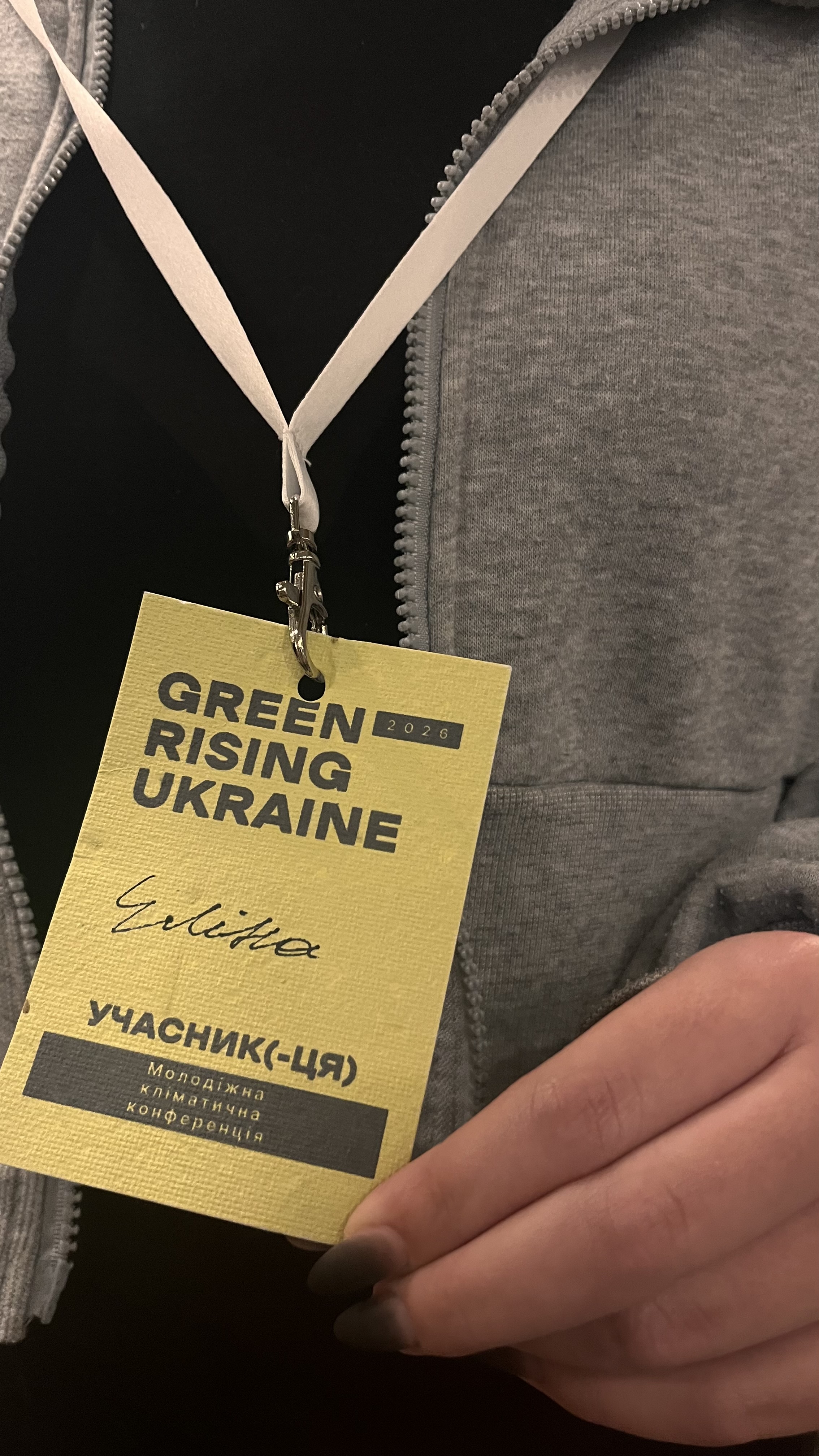
On 24–25 October, the Green Rising Ukraine 2026 youth climate conference took place in Bukovel (Ivano-Frankivsk Oblast)

 Green Rising Ukraine 2026: young people have drafted a climate statement for COP31


The two-day event in Bukovel attracted around 230 participants. On the second day, a panel discussion on sustainable business models and the impact of the war on food security was moderated by Elina Slobodska, a young journalist from GreenPost.
On 24–25 October, the Green Rising Ukraine 2026 youth climate conference took place in Bukovel (Ivano-Frankivsk Oblast) under the slogan ‘The voice of young people for climate action: from Ukraine to COP31’. This was the third such conference. Around 230 participants from various regions of the country took part, both in person and online via a network of 16 hubs.
The event was organised by the NGO ‘Women and Children – Our Future’ with the support of UNICEF and financial backing from the German Federal Ministry for Economic Cooperation and Development (BMZ) via KfW, in partnership with the GEF Small Grants Programme, which is implemented by UNDP. GreenPost is, as usual, the conference’s media partner.
This issue is particularly important for young people. According to the Climate Risk Index for Children, which UNICEF has been compiling since 2021, Ukraine is classified as a country with medium to high levels of risk: heatwaves, droughts and floods are occurring with increasing frequency. “At UNICEF, we view climate change as a crisis in the field of children’s rights. Every child has the right to a healthy environment. However, this right is under threat,” said Anne-Claire Dufay, Head of the UNICEF Office in Ukraine.
Day One: From theory to practical experience
As part of the programme, on the first day the participants learnt about how global climate decisions are made, and about the work of the UNFCCC, the Conference of the Parties (COP) and YOUNGO, the youth network under the Convention. The main sessions were held in a World Café format, focusing on four themes: environmental education, opportunities for climate action, zero waste, and the resilience of ecosystems and communities. The workshops followed the formula ‘understand → discuss → create → act’. We covered this in more detail in our article on GreenPost.
Day Two: the declaration, business and food security
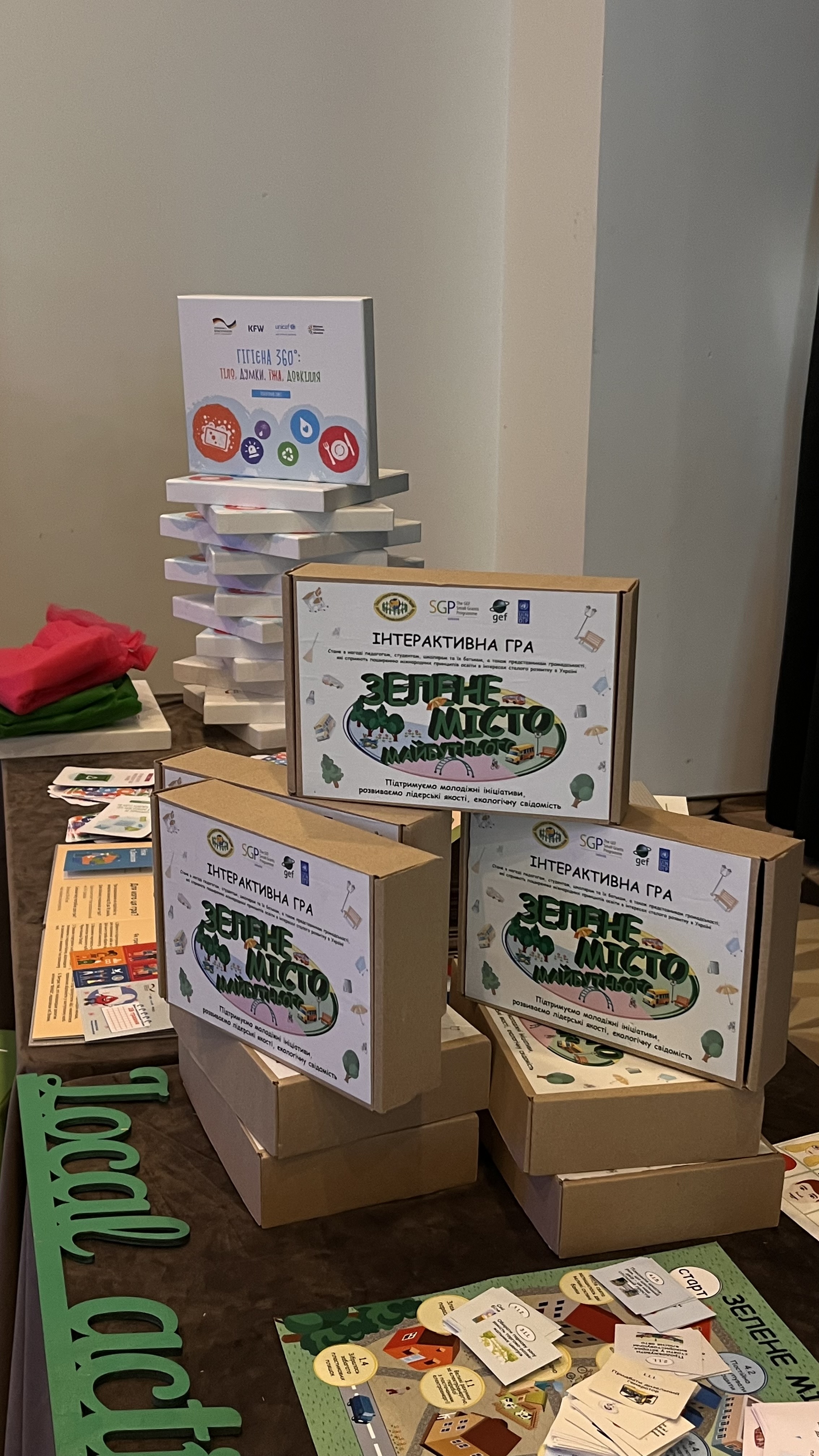
The following day, 25 October, participants worked on the text of the Youth Climate Declaration. The programme also featured a panel discussion on sustainable business models, a workshop entitled ‘From idea to result: developing environmental projects led by young people’, and the launch of a competition for youth-led climate initiatives supported by the GEF Small Grants Programme. At the ‘Stakeholders and Best Practices Alley’, young people had the opportunity to talk to organisations working in the field of climate and the environment.
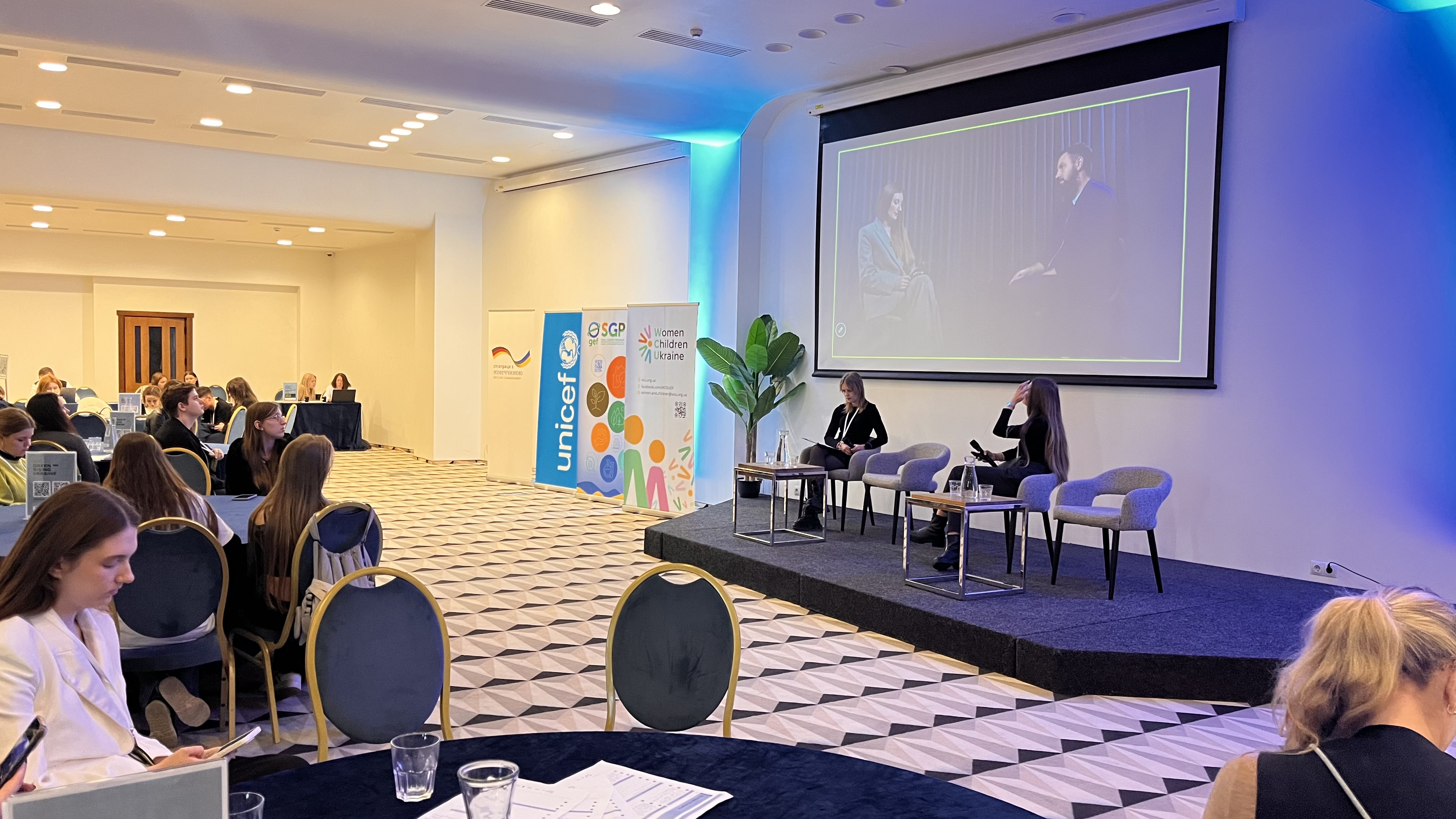
The panel discussion on sustainable business models and the impact of the war on global food security was moderated by Elina Slobodska. She writes articles on environmental issues for GreenPost and is also a student at the O. I. Marinesko Maritime Vocational College of the National University ‘Odessa Maritime Academy’. The participants discussed the environmental and socio-economic consequences of a full-scale war.
Key topics included mine contamination in Ukrainian territories, the challenges of humanitarian demining, the impact of hostilities on the environment and agriculture, and threats to food security in Ukraine and globally.

This topic echoes the discussions held by the conference experts. Diana Lanovets, an investigative journalist at Novyny Live, emphasised: “Today, systematic media coverage and journalistic investigations into environmental crimes are critically important in drawing the world’s attention to the war’s impact on the environment.”

What next?
The main practical outcome of the conference was a set of recommendations for Ukraine’s 2026 National Youth Climate Declaration. It is planned to be presented at the Ukrainian pavilion during the UN Climate Change Conference (COP31) in Antalya.
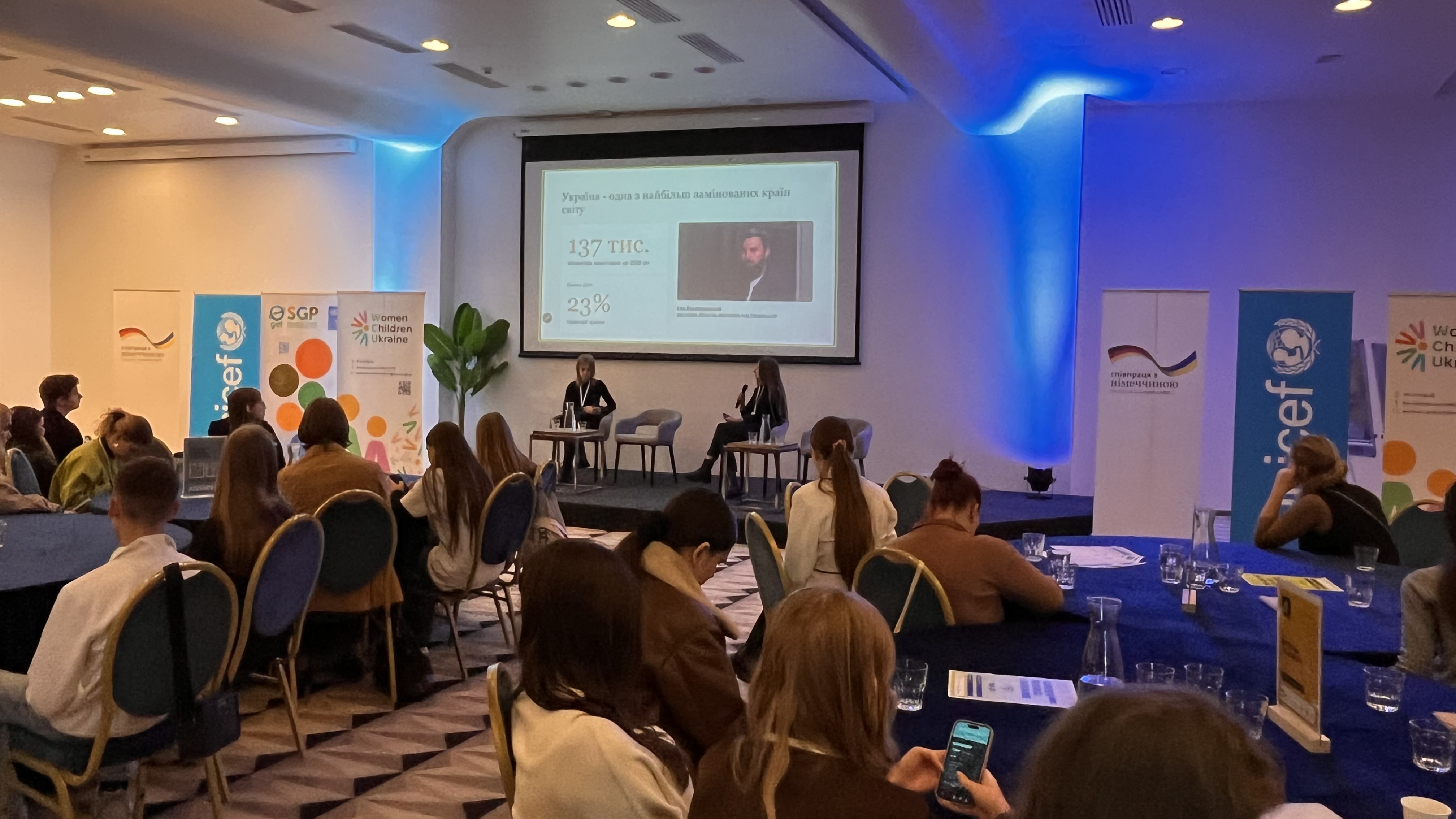
For young journalists and activists, such events offer an opportunity not only to listen to experts, but also to lead the discussion themselves on climate and security. After all, environmental security today is not just about preserving nature, but is also a vital component of Ukraine’s recovery and global stability.
Photo: GreenPost
Read more news on GreenPost.


