



Scientists are investigating the phenomenon of ‘seeing auras’
The human energy field and the history of experiments.

 International Aura Awareness Day on 28 November: myths, psychology and science


Every year on the fourth Saturday in November — in 2026, this date falls on 28 November — followers of spiritual practices, bioenergy and a holistic approach to health celebrate International Aura Awareness Day. The initiative began in 2002 in the USA as an educational project designed to encourage people to pay more attention to their own inner state, emotional well-being and the harmony between body and mind.
In traditional Eastern philosophical systems, particularly in Hinduism and Buddhism, the concept of life energy (prana or qi) and a subtle energy field surrounding a living being has existed for millennia. Followers of these teachings describe the aura as a multi-layered radiation, the colour and intensity of which are said to change depending on a person’s mood, stress levels, physical well-being and spiritual development.
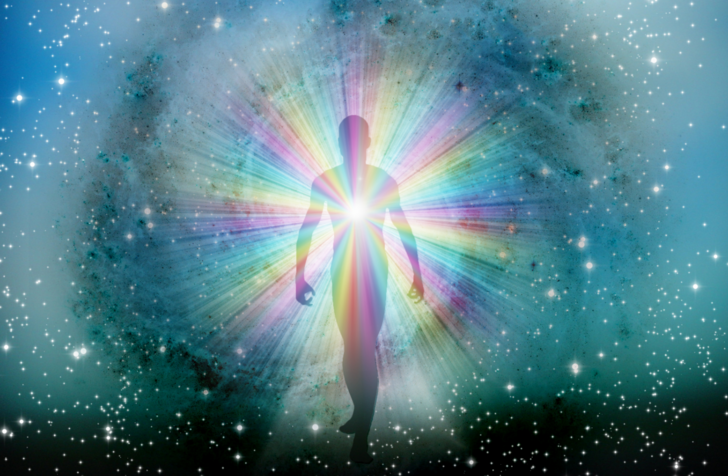
Modern evidence-based science and medicine approach the phenomenon of the aura from a rational perspective, distinguishing between the metaphorical perception of a person’s emotional state and actual physical phenomena:
- The body’s physical fields: the human body does indeed generate weak electromagnetic and thermal fields as a result of the activity of the heart, the brain and metabolic processes, which are detected by medical devices (electrocardiographs, electroencephalographs and thermal imaging cameras); however, this spectrum is invisible to the naked eye;
- The Kirlian effect: the ‘aura photographs’ that were popular in the 20th century actually capture a gas-discharge glow around objects in a high-frequency electric field, which depends primarily on the moisture content of the skin and the physical properties of the environment;
- Neuropsychology and synesthesia: Experts attribute the ability of some people to ‘see coloured halos’ around others to the way the visual cortex of the brain functions, to synesthesia (the combination of emotional perception and visual imagery), or to migraine auras.
Despite the lack of scientific evidence for the existence of ‘subtle energy bodies’, psychologists note that the very idea of being aware of one’s own ‘aura’ can serve as a useful metaphor for personal boundaries and one’s psycho-emotional space. In the context of chronic stress and information overload, the ability to recognise one’s own exhaustion in good time, to replenish one’s emotional reserves and to maintain inner balance remains a vital component of every person’s mental health.
Read more news on GreenPost.


