



Holodomor Victims’ Remembrance Day: a crime with no statute of limitations
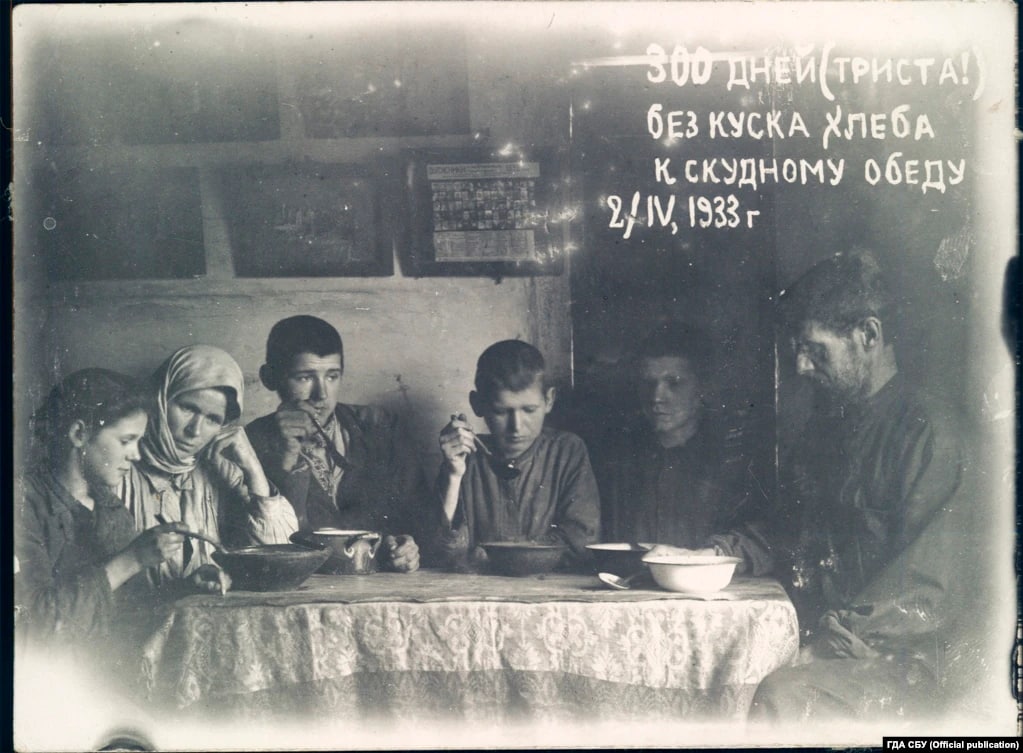
Every year, on the fourth Saturday in November, Ukraine commemorates the innocent victims of the Holodomors — the man-made famine, a crime unrivalled in its cruelty, cynicism and lethality. For decades, the totalitarian regime suppressed even the slightest hint of this crime just as ruthlessly as it killed the people themselves. Yet the collective memory has preserved the truth, which today comes to light in the horrific details of those tortured, tormented and killed – both the living and the unborn.


This Saturday, 28 November, we will light a candle of remembrance in our window – so that we do not forget, to pay our respects, and to stand united in our condemnation of the perpetrator and in our prayers for the lost, tortured souls of millions of Ukrainians.
Every year on Holodomor Victims’ Remembrance Day at 16:00 , there is a nationwide minute’s silence, after which anyone can place a lit candle on their windowsill as a sign of solidarity and in memory of those who perished.
For a long time, the Soviet communist regime convinced the world that the famine was a natural phenomenon, and people were brutally punished for every word of truth or even for expressing the slightest doubt. Out of fear and due to the depth of their psychological trauma, many of those who survived did not dare to speak of their experiences, even to their own children. However, the collective memory has brought the truth out of that hell. Today, it speaks to us through documents, diaries and the recollections of eyewitnesses.

We honour the victims of the famines; however, it is worth explaining that the horrific events of 1921–1923 and 1946–1947 are more commonly referred to by historians as ‘mass man-made famines’, on the grounds that the main factors during these periods were the plundering of resources and class-based terror, although they certainly had catastrophic consequences. In Ukrainian legislation (presidential decrees of 1998 and 2007), the general name ‘Day of Remembrance for the Victims of the Holodomors’ has been established.
The famine of 1921–1923, according to historians, was caused by the aftermath of the war, drought in southern Ukraine, but above all by the Bolshevik ‘food requisitioning’. The Soviet authorities forcibly seized grain from Ukrainian villages and transported it by train to Russia’s industrial centres (Moscow, Petrograd) and even for export, whilst Ukrainian peasants were dying (between several hundred thousand and 1.5 million people perished).
The Holodomor of 1932–1933 – themost horrific and largest-scale crime, recognised at national and international levels as an act of genocide against the Ukrainian people. It was a deliberate, planned and systematic confiscation of all food supplies, aimed at punishing Ukrainians for their resistance to occupation and collectivisation. Around 3.9 million people perished.
The famine of 1946–1947 – a post-war famine caused by crop failure, but mainly by the fact that the Stalinist regime continued to forcibly confiscate grain from peasants and export it to the newly formed socialist bloc (Poland, Czechoslovakia, East Germany) in order to consolidate its geopolitical influence. Around 1 million people died.
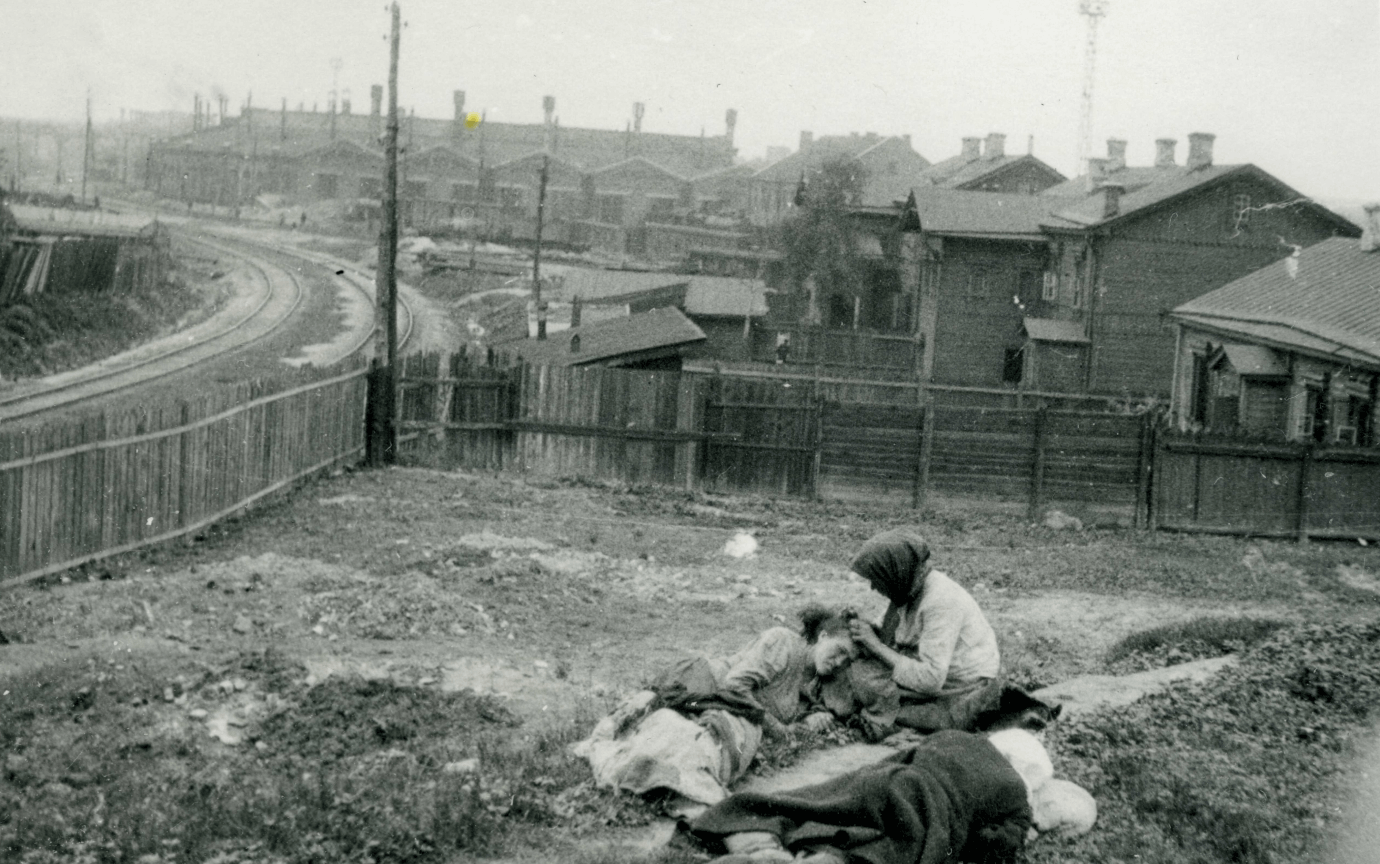
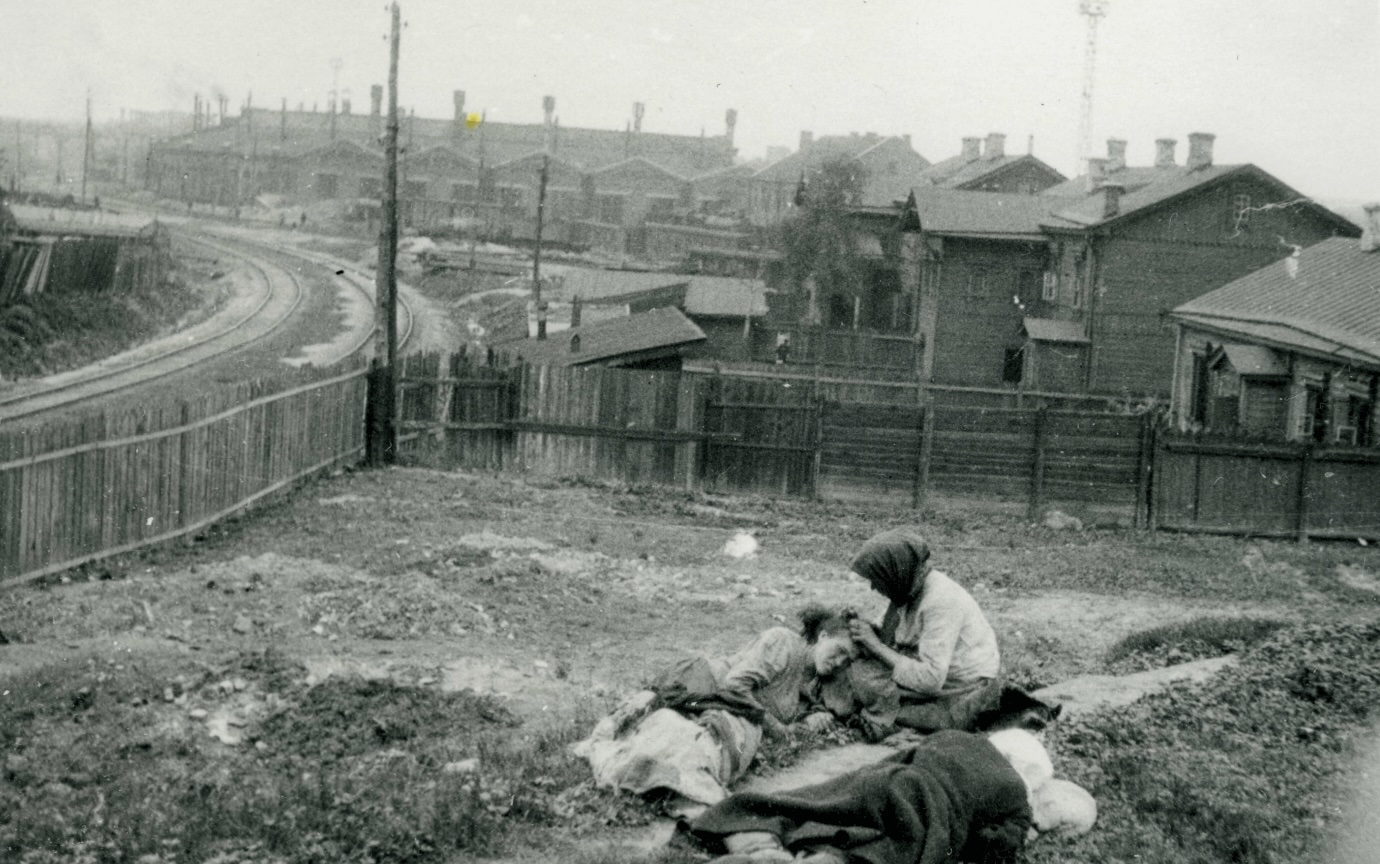
The mass famine, artificially created by the totalitarian communist regime, constituted an act of genocide against the Ukrainian people. A century ago, its aim was to suppress resistance to Soviet rule and to eliminate the independent Ukrainian peasantry, which, despite all the oppression and centuries-old prohibitions, had vividly demonstrated its national identity, to the point of destroying the potential for the restoration of Ukrainian statehood.
The ultimate aim of the Holodomor, as a deliberate policy of the Kremlin, was to permanently consolidate Ukraine as an integral part of the USSR and to transform (Russify) the Ukrainians under the guise of forming a ‘single Soviet people’. The authorities were aware that the preservation by Ukrainians of their own distinct identity and consciousness left open the potential for the restoration of Ukrainian independence and Ukraine’s withdrawal from the Union. The Holodomor was intended to eliminate even the slightest possibility of events unfolding according to this scenario.
from the website of the Holodomor Museum
Since it had not been possible to turn Ukrainians into a Soviet population – despite countless attempts to do so – the totalitarian machine decided simply to completely annihilate those who identified themselves as Ukrainians.
The Communist authorities were well aware that as long as Ukrainians remembered their own culture, language and history, there would be a threat of Ukraine regaining its independence. The roots of this fear lay in the events of the Liberation Struggle:
- In 1917, the Ukrainian People’s Republic (UPR) was established. The Bolsheviks launched an armed attack against it, whilst at the same time establishing the puppet Ukrainian Soviet Socialist Republic (USSR).
- The Armed Forces of the Ukrainian People’s Republic and the insurgent units continued to put up resistance until the end of 1921. The forces were unequal, and the Bolsheviks succeeded in occupying most of the Ukrainian territories.
- In order to temporarily lull the population into a false sense of security and win their loyalty, the authorities announced a policy of ‘Ukrainisation’ in 1923. However, the rapid development of modern culture — literature, theatre and cinema — proved a threat to Moscow. The response was terror: in the 1930s, nearly 30,000 members of the Ukrainian intelligentsia were repressed or sent to concentration camps (‘The Executed Renaissance’).
- At the same time, the regime was destroying the Church as the spiritual pillar of the people: by 1931, over 80 per cent of rural churches in Ukraine had been closed.
- From 1929, the ‘Great Turn’ began — forced collectivisation, the deportation of hundreds of thousands of hard-working peasants (‘dekulakisation’) and the sale abroad of grain confiscated from the people to finance imperial industrialisation.
When the Ukrainian countryside responded with hundreds of uprisings, the totalitarian machine resorted to outright extermination.
The mechanism of the crime: how starvation as a method of murder worked
The 1932 harvest in Ukraine was sufficient to feed the population. The famine was not a natural disaster — it was man-made:
Unreasonable grain procurement quotas: The setting of deliberately unrealistic grain delivery quotas.
‘The Law of the Five Ears of Corn’ (7 August 1932): People were punished by execution or 10 years in a concentration camp for picking just a few ears of corn from a collective farm field. Not even starving children were spared.
‘Blackboard’ regime: A complete military blockade of villages and districts that had failed to meet their quotas. All goods were confiscated from these areas, and trade, travel and any supplies were prohibited.
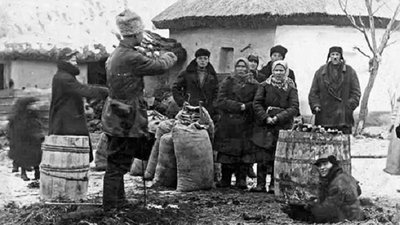
‘Tug crews’: Groups of activists confiscated not only grain from families, but also dried grain, potatoes, beetroot, beans and even seeds for sowing.
Border blockade: Secret directives prohibited peasants from leaving Ukraine and the Kuban. The roads were blocked by detachments of the OGPU.
Information censorship: The authorities denied the tragedy, rejected international humanitarian aid and punished people for using the word ‘famine’.
The appalling losses and the scale of the disaster
According to the findings of researchers at the Institute of Demography and Social Studies of the National Academy of Sciences of Ukraine, the direct losses due to excess mortality amount to approximately 3.9 million people. A further 600,000 represent the birth deficit (Ukrainians who were never born). In total, demographic losses amount to at least 4.5 million (and, taking into account the wider consequences and Ukrainian ethnic territories outside the Ukrainian SSR, historians cite figures ranging from 7 to 10 million).
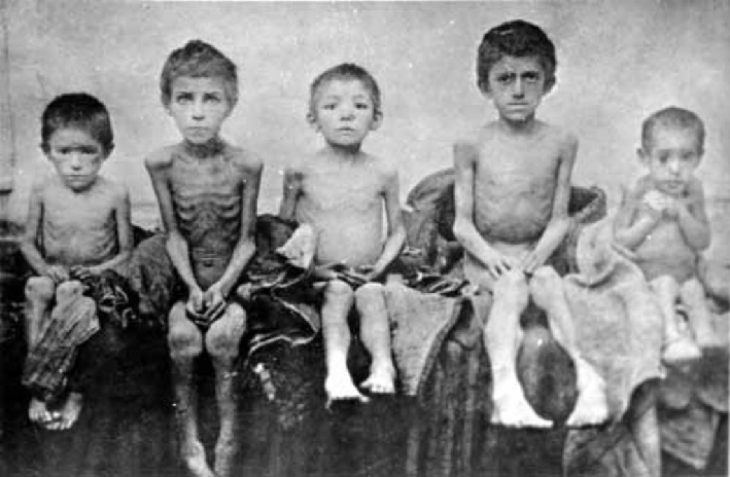
Mortality rates peaked in the spring and summer of 1933. Almost half of those who died were children and teenagers. The nation’s future was cut short: generations of artists, scientists, engineers and farmers were never born.
Consequences that are still being felt today
Famine and the Holodomor dealt a catastrophic blow to our gene pool.
Artificial alteration of the ethnic composition: Settlers from Russia and Belarus were brought in by the trainload to the depopulated villages of the Donbas, the Azov region and southern Ukraine, which artificially distorted the historical linguistic and cultural landscape.
The destruction of the traditional way of life: The destruction of the distinctive Ukrainian village, with its heritage, language and economic independence.
Transgenerational trauma: A subconscious fear of speaking the truth, a fear of authority and the habit of stockpiling rusks have been passed down through the generations. Only now are we truly coming to terms with the sheer scale of the horror our ancestors endured.
Relevance to the present day: unpunished evil returns
The link between the Holodomor and Russia’s current full-scale war against Ukraine is direct, obvious and systematic.
The current aggression is a deliberate continuation of that very same policy of genocide. As historians point out, Putin is simply trying today to complete what Stalin failed to achieve: the eradication of the Ukrainian nation.
The enemy’s methods have not changed: just as Soviet activists looted granaries, so too have the occupiers since 2022 been hauling away Ukrainian grain from the Kherson region, Zaporizhzhia and the east in lorries and dry-cargo ships. In 1933, peasants were starved to death under the ‘black boards’ — in 2022, the Russian army laid a complete siege to Mariupol, killing civilians through thirst, starvation and a lack of medicines. Missile strikes on the ports of Odesa and the Danube, the destruction of grain silos and the mining of the black soil — these are attempts to hold not only Ukraine but the whole world hostage.
The main historical lesson of the Holodomor is a harsh one: the genocide was only made possible because, in the early 1920s, we lost our own independent state. Left without its own army or government, the Ukrainian people found themselves face to face with a ruthless occupier.
We are not defenceless today. Our independence is being defended by the Armed Forces of Ukraine, and what happens next depends on each and every one of us.
What each of us can do today:
- To record the memories of relatives whilst the last eyewitnesses to those events are still alive.
- At 4.00 pm, bow your head in a nationwide minute’s silence and place a candle in the window.
- Remember: the greatest tribute we can pay to the victims of the past is our unity, our support for the armed forces and the defence of our independence today.
Honouring the memory of the victims of the famines is not merely a matter of mourning; it is about restoring justice.
The totalitarian regime sought not only to exterminate millions of Ukrainians, but also to erase all memory of them forever, depriving them even of the right to graves and names. When we light a candle in the window and bow our heads in prayer, we restore the voices of those who were tortured.
We have survived and preserved our land, our language and our nation — and it is in our resilience, dignity and freedom that our innocently murdered ancestors find their eternal continuation.
Read more news on GreenPost.


