



Unconquered through the ages: how dignity became the defining trait of the Ukrainian people
Physical death or defeat is nothing compared to the loss of one’s soul, one’s name and the right to remain a free person. Dignity cannot be taken away by force unless a person chooses to compromise their conscience. Ukraine and the Ukrainian people have repeatedly demonstrated this truth to the whole world, paying the ultimate price for their freedom. Every year on 21 November, we mark the Day of Dignity and Freedom — a holiday that was born not in the offices of those in power, but on the frosty barricades of popular resistance.


The anatomy of dignity: what it is and why it cannot be taken away
Many people perceive dignity in different ways, yet at its core lies the recognition of the absolute, unconditional value of every individual simply by virtue of their birth. It is a person’s fundamental moral compass, their inner core and their self-respect.
A person with a sense of dignity is aware of their own boundaries and does not allow anyone to belittle them, whilst at the same time recognising the same value in those around them. Dignity is fundamentally different from pride or arrogance: it does not place a person on a pedestal above others, but demands mutual respect amongst equals.
A German philosopher articulated this distinction with great subtlety:
Everything in the world has either a price or intrinsic value. That which has a price can be replaced by something of equivalent value (sold or bought). But that which is beyond any price and has no equivalent possesses intrinsic value. A person must never be a means to someone else’s end — they are always an end in themselves.
Immanuel Kant
Inherent (legal) dignity belongs to a person from their very first breath. At the same time, a sense of dignity as a character trait — the ability not to grovel before the powerful, not to mock the weak, and to speak the truth in the face of danger — is not something one is automatically born with. It is nurtured within oneself through daily spiritual endeavour. Dignity is forged through acts of will: the refusal to grovel before tyrants, the unwillingness to mock the weaker, and honesty when it would be more advantageous to remain silent.
It is telling that in the Ukrainian language, the word ‘dignity’ is used predominantly in a lofty moral, ethical and legal sense, whilst its Russian equivalent, ‘dostoinstvo’, often serves simply as an indicator of the quality of things or as a synonym for ‘advantage’, as in the expression ‘dostoinstva i nedostatki’.
In Ukrainian tradition, dignity is not merely a ‘positive trait’ of character; it is the sacred right to be a human being.
Why 21 November in particular: two revolutions that thwarted the Kremlin’s plans
Dignity and Freedom Day, established in 2014, marks the start of two pivotal events in modern Ukraine’s history.
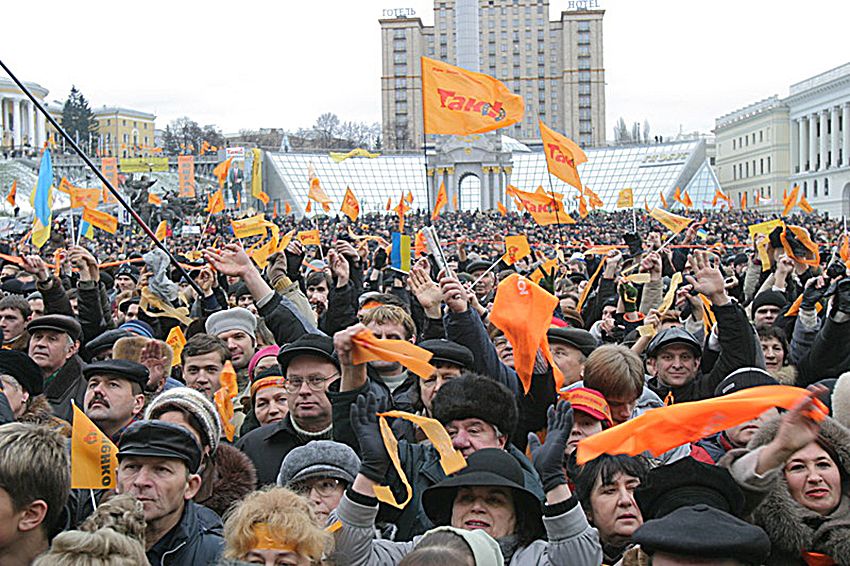
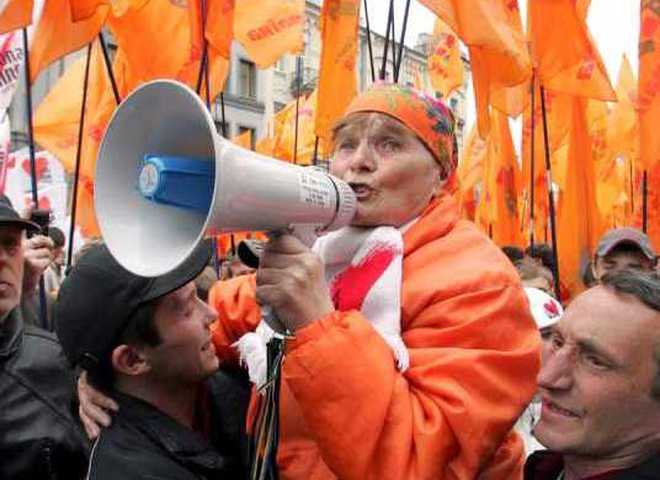
The Orange Revolution (2004): the triumph of the electoral vote
On 21 November 2004, events took place in Ukraine that marked the beginning of the Orange Revolution. On that day, the second round of the presidential election was held, following which Viktor Yanukovych’s campaign team claimed victory, whilst observers reported numerous instances of electoral fraud. By that evening, the first protesters had gathered on Independence Square in Kyiv. Within a matter of days, the number of demonstrators had swelled to hundreds of thousands. The square was transformed into a tent city with its own logistics, kitchen and stage. The protest was peaceful and non-violent, characterised by orange-coloured symbols. Protest gatherings sprang up in towns and cities across Ukraine. And on 3 December 2004, the Supreme Court of Ukraine declared the results of the second round invalid. On 26 December, a re-run of the election (‘third round’) took place, in which Viktor Yushchenko was declared the winner. In this way, the people defended their right to a fair expression of their will and to democracy.
The significance of the Orange Revolution cannot be overstated. Ukrainians proved that the authorities do not have a monopoly on shaping the future, and that any attempt at electoral fraud will be met with resistance. That same year saw constitutional reform, with Ukraine transitioning from a presidential-parliamentary to a parliamentary-presidential system of government (limiting the powers of the president in favour of the Verkhovna Rada).
Key figures of the Orange Revolution. Opposition leaders: Viktor Yushchenko, Yulia Tymoshenko, Oleksandr Moroz (leader of the Socialist Party, who joined the coalition), Anatoliy Kinakh, Petro Poroshenko, Roman Bezsmertny, Andriy Parubiy. Civil resistance: The ‘Pora!’ youth movement (Vladyslav Kaskiv, Yevhen Zolotariov and others); Opponents: Leonid Kuchma, Viktor Yanukovych, Serhiy Kivalov (chairman of the Central Election Commission). Cultural figures, artists and sportspeople: Ruslana Lyzhychko, Svyatoslav Vakarchuk, Maria Burmaka, Vitali Klitschko, as well as the band Hryndzholy, whose song ‘Together we are many, we cannot be defeated’ became the unofficial anthem of the Orange Revolution.
The Revolution of Dignity (2013–2014): the battle for a civilisational choice
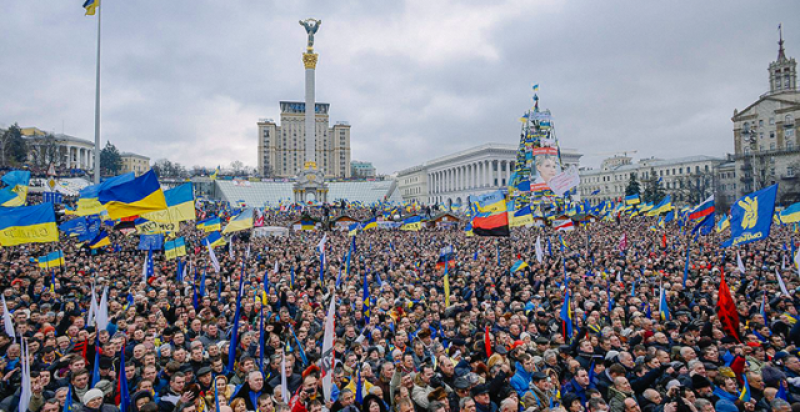
Exactly nine years later, on 21 November 2013, Mykola Azarov’s government suddenly announced that it was suspending preparations for the signing of the Association Agreement between Ukraine and the European Union. A small group of people and journalists gathered on the Maidan under the flags of Ukraine and the EU.
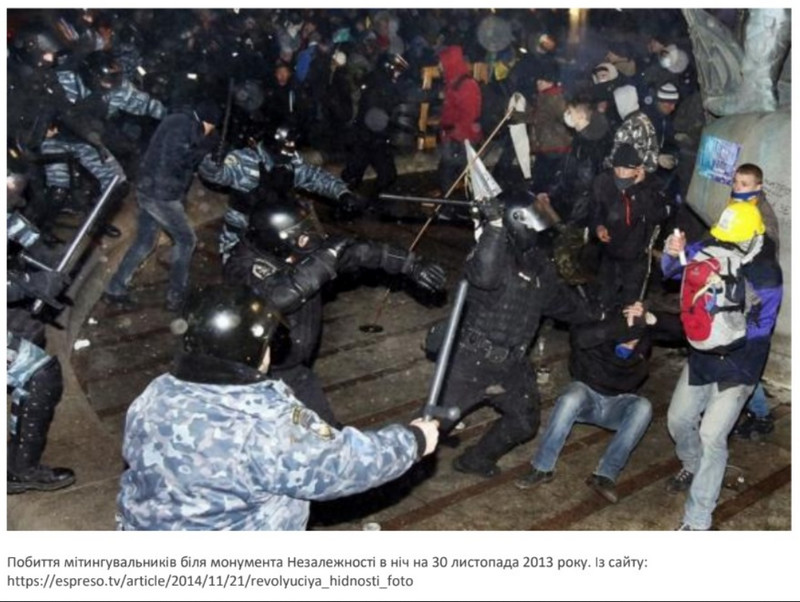
On the night of 30 November, the ‘Berkut’ special forces unit brutally beat the students who remained on the Maidan. The protest, which had started out as a purely pro-European movement, turned into a nationwide uprising against the authorities’ high-handedness. On 1 December, between 500,000 and one million people took to the streets of Kyiv.
In January 2014, parliament passed the ‘dictatorial laws of 16 January’, which led to violent clashes on Hrushevsky Street. The first activists were killed (Serhiy Nigoyan, Mykhailo Zhiznevsky; Yuriy Verbytsky was tortured to death).
On 18–20 February 2014, the authorities deployed weapons and snipers against the protesters. A mass shooting of unarmed Maidan activists took place on Instytutska Street, resulting in the deaths of over 100 people (the Heavenly Hundred).
On 21–22 February, following a speech by Centurion Volodymyr Parasyuk setting out an ultimatum, the Maidan refused to compromise. Yanukovych and his entourage fled to Russia. The Verkhovna Rada removed him from power and reinstated the 2004 Constitution.
As a result, Ukraine signed the Association Agreement with the EU, enshrined its commitment to EU and NATO membership in the Constitution, and broke free from Russia’s sphere of influence.
Names associated with the Revolution of Dignity – Heroes of the Maidan (Heavenly Hundred): Serhiy Nigoyan, Mykhailo Zhiznevskyi, Yuriy Verbytskyi, Ustym Holodnyuk. Organisers of the resistance and field commanders: Andriy Parubiy — commander of the tent city and head of the Maidan Self-Defence; Volodymyr Parasyuk — a Maidan centurion, whose speech from the stage derailed the politicians’ negotiations and forced Yanukovych to flee; Mustafa Nayem — a journalist, whose Facebook post on 21 November sparked the first gathering of people in the square. The then leaders of the parliamentary opposition: Arseniy Yatsenyuk, Vitali Klitschko, Oleg Tyagnibok, Petro Poroshenko. The ‘Euromaidan SOS’ movement, Automaidan, underground hospitals and doctors (Olga Bogomolets). Opponents (the Yanukovych regime): Viktor Yanukovych, Mykola Azarov (Prime Minister), Vitaliy Zakharchenko (Head of the Ministry of Internal Affairs), and members of the ‘Berkut’ special forces unit.
The Face of Courage: From the School Classroom to Immortality
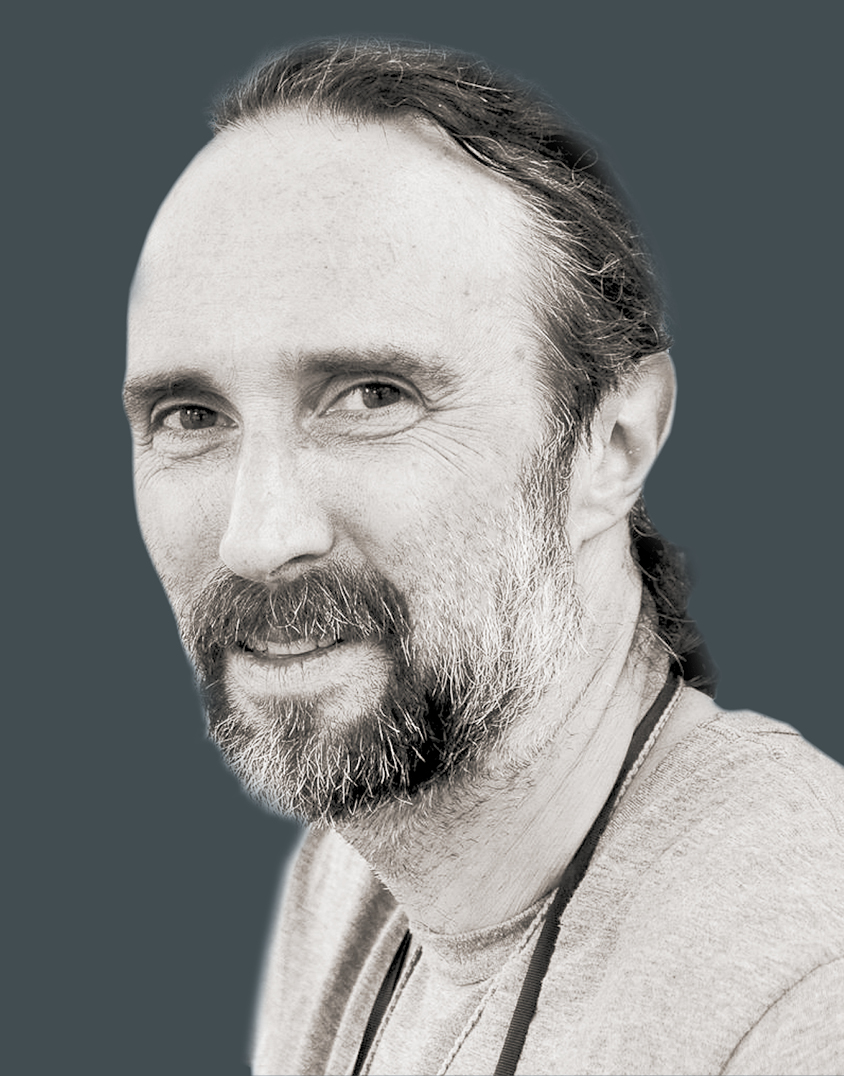
Yuriy Verbytsky was passionate about rock music, hiking and mountaineering, and had conquered peaks in the Carpathians and the Caucasus. From 2006, he was a member of the ‘Extreme’ mountaineering club and held a first-class mountaineering qualification. Yuriy’s favourite T-shirt bore the slogan ‘Mountaineering against malice and hatred’.
An active participant in the Revolution of Dignity. Euromaidan activist Yuriy Verbytsky first came to Kyiv in December 2013 following the beating of students on Independence Square. Throughout the winter of 2013–2014, he regularly visited the Maidan, where he often spoke with representatives of the security forces, urging them not to use weapons against their own people. He kept an eye out for any provocations, handed out tea and food, and spoke to opponents, explaining to them why people had come out onto the Maidan. (Further information can be found on the website of the National Memorial Complex of the Heroes of the Heavenly Hundred – Museum of the Revolution of Dignity.
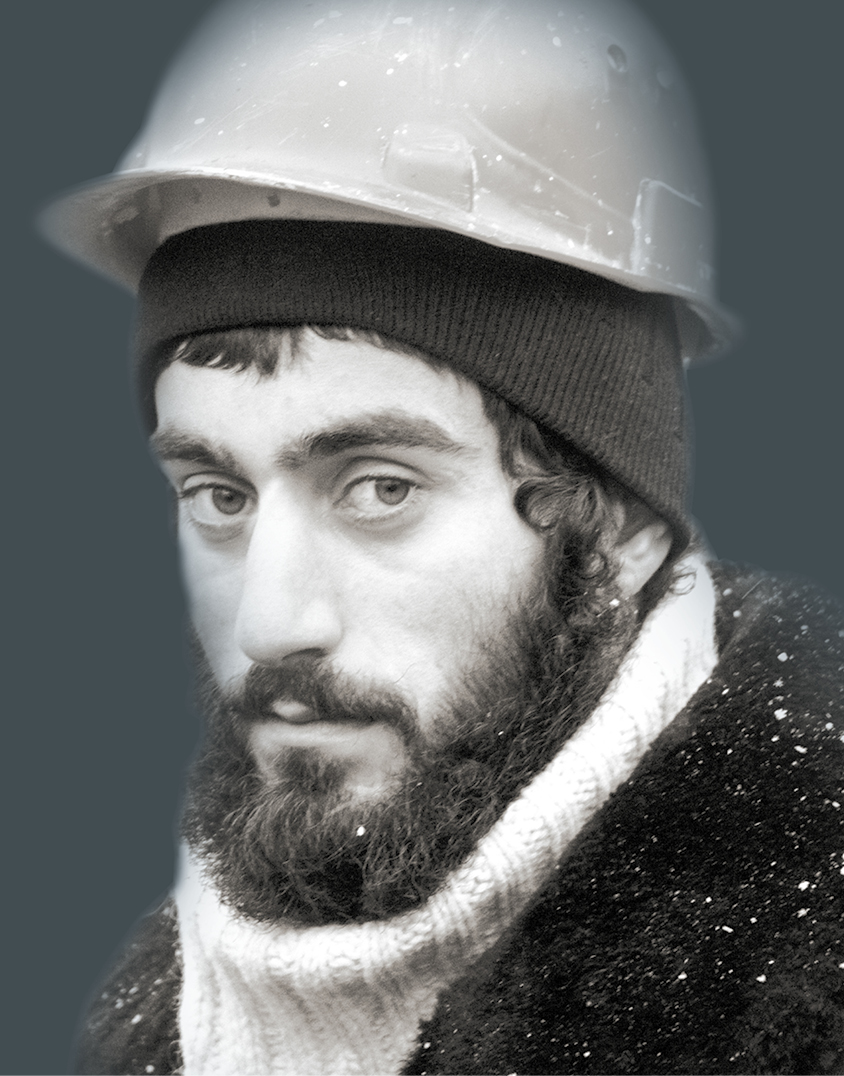
Serhiy Nigoyan was born on 2 August 1993 in the village of Bereznuvativka, Solonyanskyi District, Dnipropetrovsk Oblast, into an Armenian family who had moved to Ukraine to escape the war in Nagorno-Karabakh. He practised karate and, in 2012, came third in the Dniprodzerzhynsk Kyokushin-style karate championship. He dreamt of becoming an actor and planned to enrol at the Dnipropetrovsk Theatre and Arts College. He was fascinated by radio technology, loved poetry and dreamt of visiting the land of his ancestors. Serhiy Nigoyan first came to Kyiv, following his heart’s calling, on 8 December 2013, bringing with him the ‘Our Father’ prayer in Armenian and the flag of Armenia. It was this flag and the young man’s striking appearance that drew the attention of everyone who came to the Maidan. Artists painted his portraits; for the artist Boris Yegiazaryan, he became a son of the heart, whilst director Serhiy Proskurnya, whilst working on a project to mark the 200th anniversary of Taras Shevchenko’s birth, recorded on 21 December 2013 the young Armenian Maidan activist reading an excerpt from Shevchenko’s ‘The Caucasus’. Further information can be found on the website of the National Memorial Complex of the Heroes of the Heavenly Hundred – the Museum of the Revolution of Dignity.
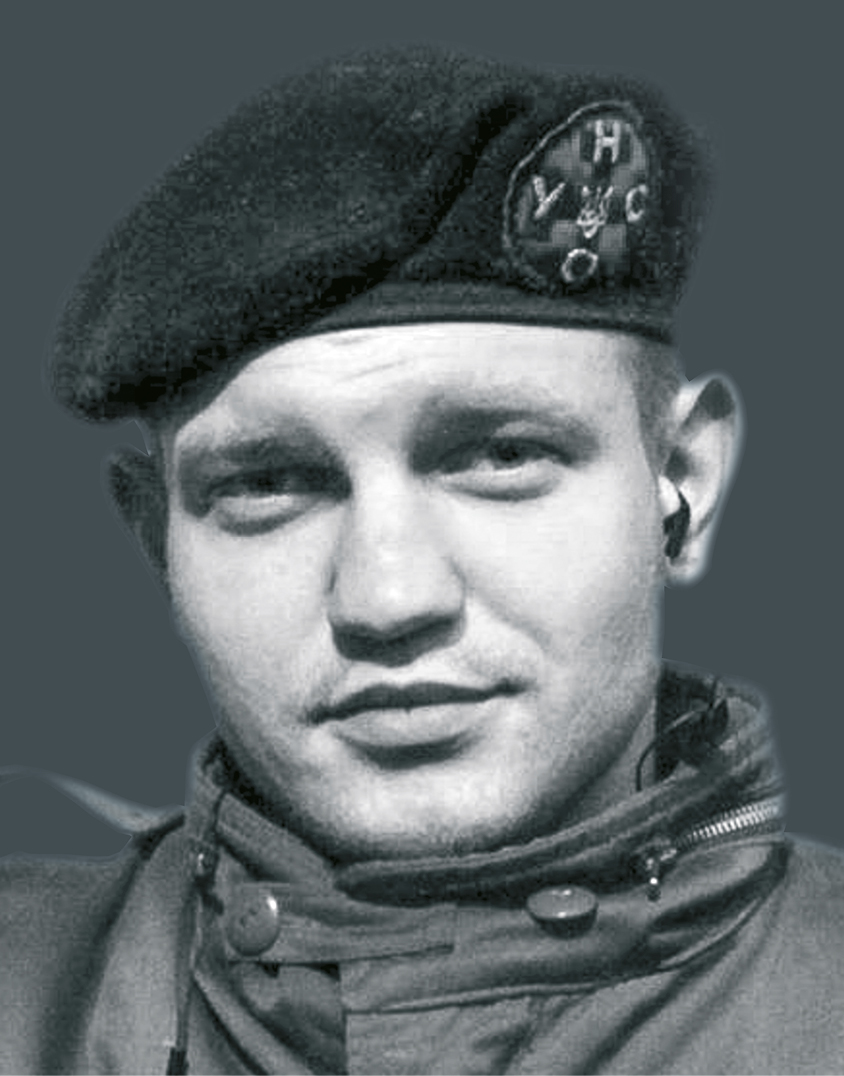
Mykhailo Zhiznevskyi was born on 26 January 1988 in Gomel, Belarus. From his school days, he had an interest in medieval history and mythology; he was a member of a knights’ club, made knightly armour and took part in historical re-enactment tournaments, and practised martial arts and airsoft. He also wanted to become a priest: he planned to complete his military service and enrol at the theological seminary in Zhirovichi, in the Grodno region.
At the age of 17, Mykhailo arrived in Ukraine. He lived in Donetsk, Kryvyi Rih, Kyiv and Bila Tserkva in the Kyiv region. He was a freelance correspondent for the newspaper *Soborna Kyivshchyna*. He was not officially a member of any political party, but collaborated with the UNA-UNSO organisation. Fearing persecution by Lukashenko’s regime, he never revealed his real name. He usually introduced himself as Oleksiy, whilst members of UNA-UNSO knew him by the pseudonym ‘Loki’ – after the name of the Norse god of mischief and pranks. In Ukraine, he developed an interest in the country’s history and culture. It was thanks to Mykhailo Zhiznevskyi that the song ‘A Duck Swims Down the Tisza’ became a requiem for the Heavenly Hundred: when Maidan was laying its fallen defender to rest, his friends asked for this, his favourite song, to be played, and his body was carried out to the sound of it.
On 19 December, when the conflict between the protesters and the authorities escalated following the adoption of the ‘dictatorial laws’, he was on Hrushevsky Street. Video footage captured Mykhailo standing that day between the Maidan protesters and soldiers of the Internal Troops, trying to calm the angry crowd. At 8 am on 22 January, security forces attempted to push the activists back towards European Square. During these clashes, Mykhailo – who had experience of participating in re-enactment battles – was assigned to act as a shield-bearer. He walked at the front carrying a chipboard shield, using it to protect his comrades. Misha died from a bullet.” (You can read more about Mykhailo Zhiznevskyi on the website of the National Memorial Complex of the Heroes of the Heavenly Hundred – Museum of the Revolution of Dignity).
In peacetime, these three men would hardly ever have met: a young Armenian man who dreamt of becoming an actor, a Belarusian émigré and a scholar from Lviv. But when society was faced with a choice between the comfort of slavery and the risk of freedom, they found themselves fighting side by side on the front line.
Their heroism proves that: dignity is the universal language of free people. It is measured solely by one’s willingness to stand up against injustice and defend the right to be human — even at the cost of one’s own life.
On the website of the National Memorial Complex to the Heroes of the Heavenly Hundred – the Museum of the Revolution of Dignity – you can read about all the heroes of the Heavenly Hundred: 107 names and surnames of those whose lives were cut short during the winter of 2013–2014. The youngest, Nazar Voytovych, was 17. The oldest, Ivan Nakonechny, was 82.
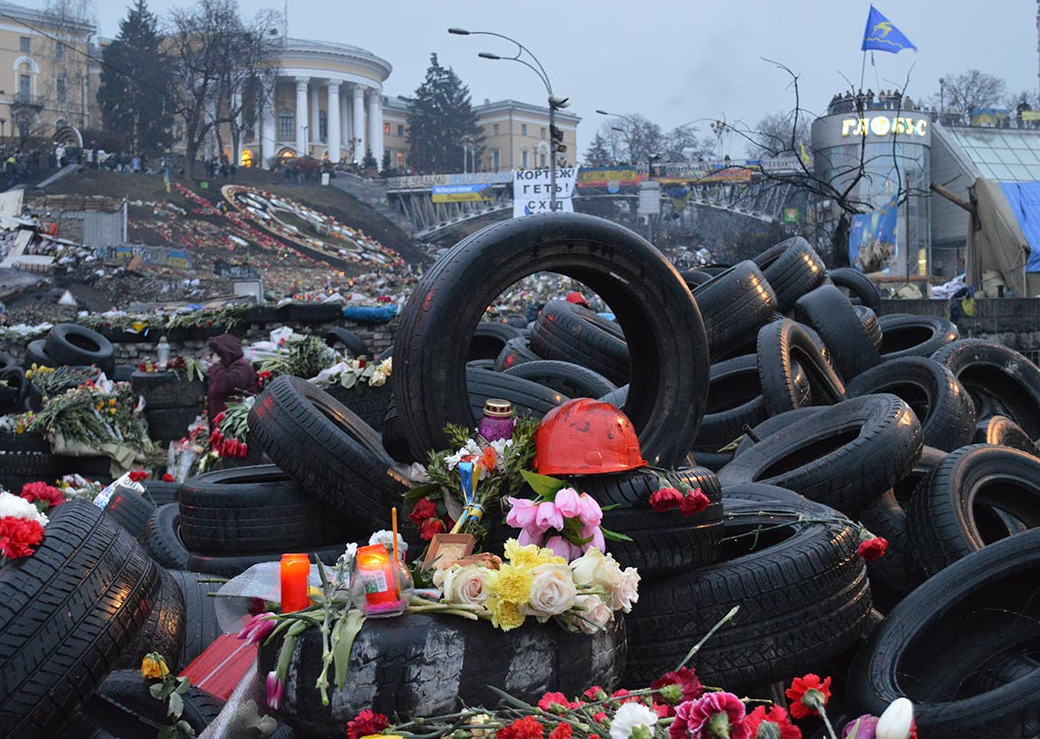
День Героїв Небесної Сотні 20 лютого – памʼять про тих, хто віддав життя за Україну
It was not politicians but ordinary, honourable people who upheld dignity on the Maidan. The fate of Serhiy Bondarchuk, a Hero of the Heavenly Hundred, is a case in point.
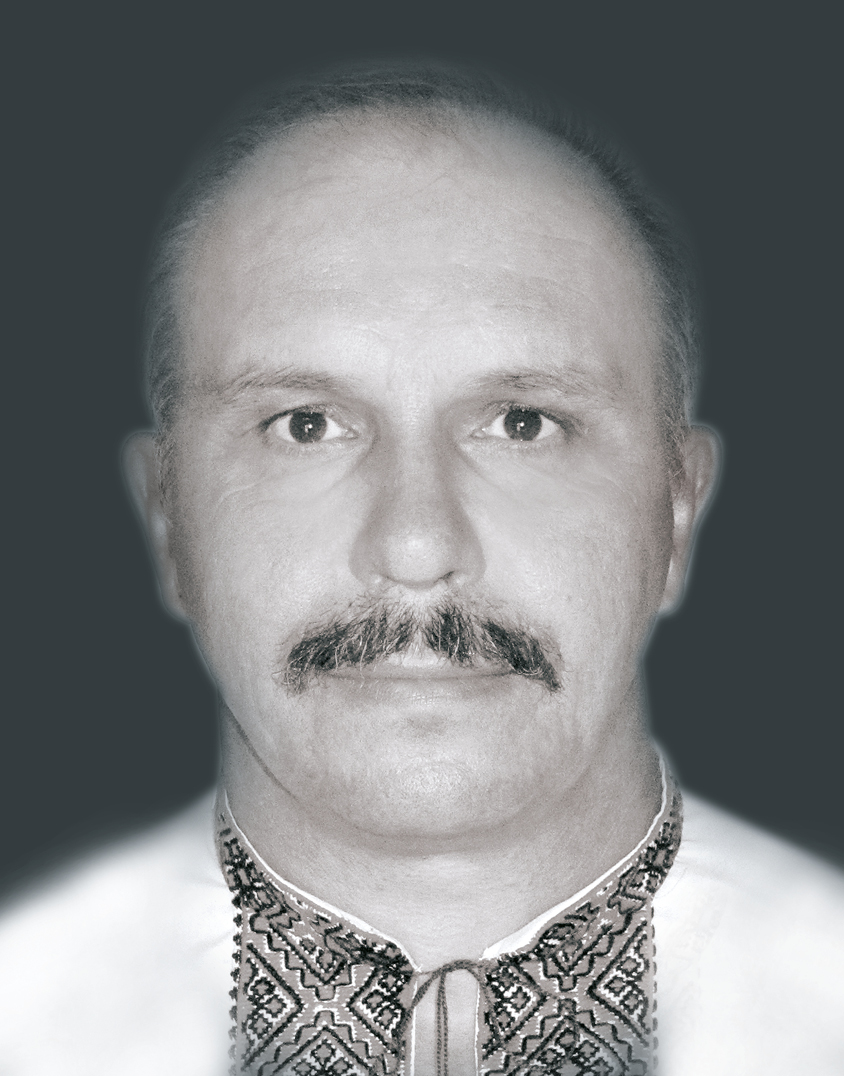
A physics and mathematics teacher of the highest category, a teaching consultant at the Starokostiantyniv Gymnasium in the Khmelnytskyi region, winner of the city-wide round of the ‘Teacher of the Year 2013’ competition, and coordinator of the All-Ukrainian ‘Levenya’ competition. An intellectual, local historian, Cossack squad leader and educator, he nurtured a sense of national identity in his pupils.
When the Euromaidan protests erupted following the beating of young people, Serhiy Bondarchuk could not stand idly by. He co-ordinated rallies in his home town, organised trips for fellow townspeople to the capital, and took his turn manning the barricades. On 20 February 2014, on Instytutska Street, Serhiy, unarmed, was carrying his wounded comrades out of the line of fire from snipers when he was killed by a sniper’s bullet. Through his own example, this teacher showed what it means to act in accordance with the principles of dignity: never to abandon a fellow human being in distress, even in the face of death.
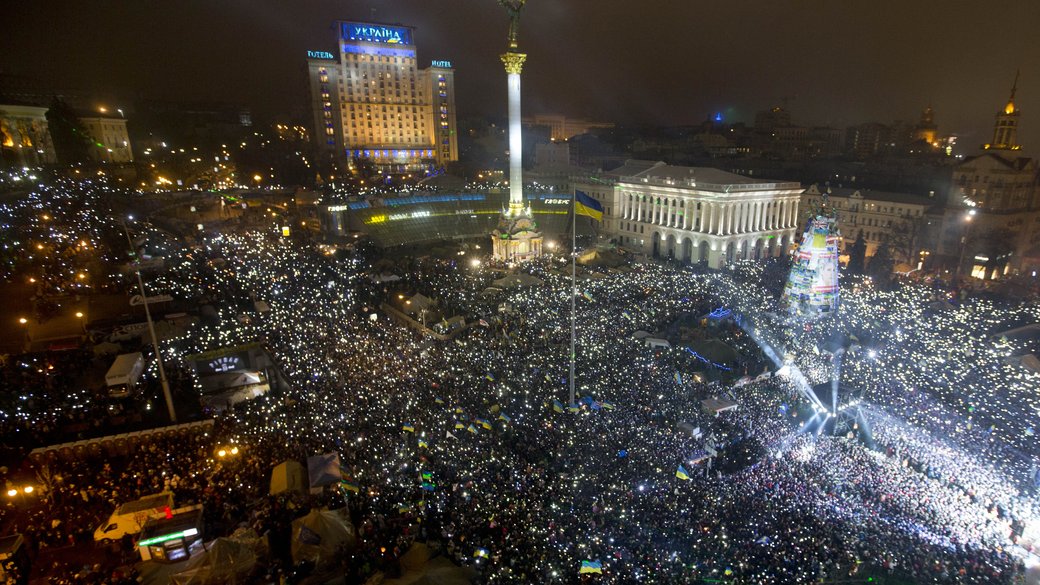
Whilst the Orange Revolution demonstrated the power of the people’s voice, the Revolution of Dignity marked a tectonic civilisational break with the post-Soviet empire. Ukraine signed the Association Agreement with the EU and set a course towards NATO. Unwilling to accept the loss of its colony, Russia occupied Crimea and invaded the Donbas as early as February–March 2014.
In telling the stories of these people, we wish to show that the finest members of the human race — the cream of the nation, people of brilliant intellect, crystal-clear honour and great hearts — gave their lives for the right to live in a free country. For when a person lives by the highest values — truth, freedom, justice and sincere love for one’s neighbour — they are morally incapable of standing idly by whilst evil unfolds before their eyes, tyranny is perpetrated or an enemy attempts to destroy their country. They cannot hide behind the backs of others or choose the comfort of silence, for the inner call of conscience proves stronger than fear and even the instinct for self-preservation. They made their self-sacrificing choice for our sake, and now it is our sacred duty to prove ourselves worthy of their noble deed every single day. To prove ourselves worthy not through grand speeches once a year, but through our daily actions: intolerance of falsehood, unwavering loyalty to our land, support for those who uphold the order, and tireless work to ensure that Ukraine, for which they gave their lives, becomes exactly as strong, free and honest as they envisioned it in their brightest dreams.
The common thread running through history: how Cossacks, dissidents and defenders preserved the soul of the nation
For Ukrainians, dignity has never been an abstract concept. It is a centuries-old tradition of refusing to be slaves:
The Cossack Free Company (16th–17th centuries): Serfs, who were regarded as mere property, fled to the wild steppes. They chose to risk dying in battle rather than live their lives as free men, under the motto ‘All are brothers at the Sich’.
Kruty and Bazaar (1918, 1921): Several hundred students at Kruty held off Muravyov’s overwhelming hordes and went to their execution singing the national anthem. Three years later, near Bazaar, 359 captured soldiers of the Ukrainian People’s Republic refused ‘pardon’ and service to the Bolsheviks — and died unbroken.
Father Omelian Kovch at the Majdanek concentration camp (1943–1944): A priest who saved Jews during the Holocaust, he refused to be ransomed from the Nazi concentration camp so that he might hear the confessions of those doomed to the gas chambers right up to the very last moment: ‘Here I see God… If I could choose between a crown here and a crown somewhere else, I would choose this crown without hesitation.’
The Gulag uprisings (Kengir, Norilsk, 1953–1954): Ukrainian political prisoners (members of the OUN and UPA fighters) broke down Stalin’s camp system from within. Women stood in front of tanks, whilst prisoners tore the humiliating camp numbers from their uniforms, forcing the empire to recognise their humanity.
The ‘Sixties Generation’ and dissidents: The actions of Vasyl Stus, Ivan Dziuba and Vyacheslav Chornovil at the ‘Ukraine’ cinema in 1965 (‘All those who oppose tyranny, stand up!’), Stus’s indomitable spirit in solitary confinement and the self-immolation of Vasyl Makukh and Oleksa Hirnyk became a challenge to the entire Soviet machinery of terror.
The Revolution on Granite (1990): The students’ hunger strike on the cobblestones of Kyiv, which shook the foundations of Soviet power and paved the way for the Declaration of Independence of Ukraine.
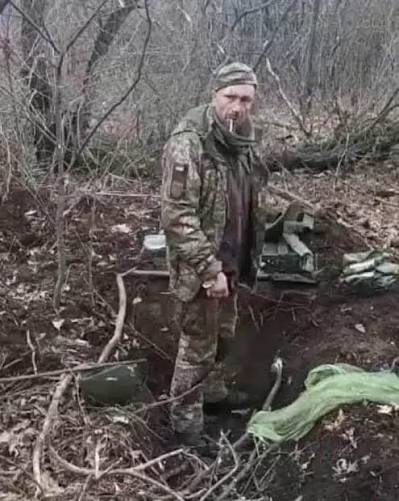
The modern war for survival: 242 days of defending Donetsk Airport (“The people held out, but the concrete didn’t”), the steel garrison of Azovstal, the unarmed residents of Kherson and Melitopol who stopped Russian tanks with their bare hands, and the calm words of sniper Oleksandr Matsievskyi before he was shot: ‘Glory to Ukraine!’.
The tragic situation we face today — a full-scale war — is a direct consequence of Ukraine’s choice to follow the path of dignity. Russia has been unable to come to terms with the fact that Ukraine has slipped from its control. The occupation of Crimea in 2014 and the full-scale invasion in 2022 were an attempt at revenge: Russia went to war not merely for territory, but for the right to destroy Ukraine’s sovereignty and punish its people for their desire to be free.
However, it was the experience of the Maidan that saved the state in February 2022. Had it not been for the habit of self-organisation, had it not been for the fear of the enemy’s might being overcome, and had it not been for the army and civil society forged on the Maidan — the enemy’s plan to ‘take Kyiv in three days’ might well have become a reality.
The Revolution of Dignity did not create a perfect state overnight, but it achieved something far greater: it restored Ukrainians’ faith in their own strength and their right to choose their own destiny. Ukraine’s present is a daily struggle to ensure that the sacrifice of the Heavenly Hundred and thousands of fallen defenders was not in vain, and that a state of decent people is established for good.
Dignity is not a material inheritance, nor is it a high office or social status. It cannot be bestowed by decree or taken away through torture, but it can be lost through one’s own compromises with one’s conscience.
Throughout Ukraine’s history, the struggle for dignity has never been reduced to mere dates on a calendar. It is a celebration of civil society, born in moments when people overcame their fear. It is the daily inner choice made by millions of Ukrainians: to stand firm, to fight for their honour, and to prove that ‘when we stand together, we are unbeatable’.
Glory to Ukraine! Glory to the heroes!
Read more news on GreenPost.


